The 11 Best Level 2 EV Chargers of 2026, Ranked
Our top picks
 9.2Price tier: Premium, $550–$750Check price on Amazon
 9.0Price tier: Mid-range, $350–$550Check price
 8.6Price tier: Mid-range, $350–$550Check price
 8.4Price tier: Budget, under $350Check price
 8.8Price tier: Premium, $550–$750Check price
 8.7Price tier: Mid-range, $350–$550Check price
We compared 11 Level 2 home chargers on power, connector, install flexibility, smart features, build quality, and price. The headline of 2026: the NACS transition is here, so the connector you buy matters more than it used to — and the power race has mostly plateaued, with 48 amps the practical ceiling for almost every home.
Your car also caps the rate — most EVs accept 11.5 kW or less on AC. Run your numbers.
The short list
Best overall — Tesla Universal Wall Connector. 48 A / 11.5 kW, the best app in the category, and the only integrated NACS + J1772 connector. If any non-Tesla EV will ever use your charger, this is the one. Hardwired-only install, ~$550–$600. Full review.
Best smart charger — ChargePoint Home Flex. The fastest here at 50 A / 12 kW, your choice of plug-in or hardwired, and one app for home plus 274,000+ public stations. ~$500–$600 street. Full review.
Best value — EVIQO Gen 2. Full 48 A smart charging, NEMA 4 / IP66 weather sealing — the best rating in this roundup — and ~$380–$430 street pricing. The sleeper pick. Full review.
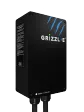
Best budget — Grizzl-E Classic. A UL-listed tank for ~$300–$450. No app, no fuss, 40 amps of Canadian-built reliability in a cast-aluminum NEMA 4 enclosure. Full review.
Best for tight panels — Emporia Pro. With the Vue 3 monitor, its PowerSmart load management can deliver a full 48 A on a panel that otherwise couldn’t support it — potentially saving thousands on a panel upgrade. ~$599. Full review.
Most features — Autel MaxiCharger AC Home. Wi-Fi + Bluetooth + Ethernet, excellent TOU optimization in the app, and 50 A / 12 kW hardwired. ~$400–$600 depending on configuration. Full review.
Hover or tap a dot for details. Full numbers are in the comparison chart.
How we ranked them
Power matters, but only to a point — anything 40 A and up refills an EV overnight, so we didn’t crown the fastest box automatically. We weighted connector future-proofing heavily this year (see our NACS vs J1772 explainer), plus install flexibility, app quality, build/warranty, and price. Scores are research-based — compiled from manufacturer specs, professional reviews, and owner reports — not lab tests. Our methodology explains exactly how the numbers work.
One deliberate choice: we score value against street prices, not MSRP. Several chargers here (EVIQO, Autel, ChargePoint) routinely sell well below list, and buying at the wrong moment can mean paying 30% more than you needed to.
Don’t overbuy amperage
48 amps needs a dedicated 60-amp breaker and often an electrician’s panel work. If your panel is tight, 40 amps on a 50-amp circuit — or the Emporia Pro with load management — gets you ~90% of the speed for far less hassle. Run our panel capacity checker before you decide; it takes two minutes and tells you what your service can actually spare.
The math, at typical ~3.2 mi/kWh efficiency: 40 A / 9.6 kW adds roughly 30 miles of range per hour; 48 A / 11.5 kW adds roughly 35–44. For a car that drives 40 miles a day, both refill the day’s use in under two hours. The 48-amp advantage only shows up on the rare nights you arrive nearly empty and leave early — nice to have, not worth a $2,000 panel upgrade. Our charge time calculator lets you model your exact car and circuit.
Connector: the decision that actually matters in 2026
Virtually every 2025+ US-market EV ships with a NACS port, formalized as SAE J3400. Older non-Tesla EVs (pre-2025 Leaf, Bolt, Ioniq 5, Mach-E, and friends) are J1772. Your home charger is a 10-year appliance, so buy for the cars you’ll own across that span:
- All Teslas / 2025+ EVs: buy NACS natively — the Tesla Wall Connector (~$440–$475) is the benchmark.
- Older non-Tesla EV you’ll keep for years: J1772 is fine and often cheaper.
- Mixed household or undecided next car: the Tesla Universal Wall Connector with its integrated Magic Dock, or any J1772 charger plus a ~$50–$120 adapter that lives in the frunk.
Our NACS vs J1772 explainer maps every charger in this roundup to its connector options.
Smart features: what to actually pay for
Two features earn their keep. Scheduling — charging on off-peak rates — can cut your charging cost in half where Time-of-Use pricing exists, and it pays for a smarter charger in months. Energy tracking is genuinely useful for expense reporting and for watching your electricity bill. Beyond those, most buyers never open the app again: solar integration, Alexa voice control, and OCPP utility programs are nice for the few who’ll use them.
If you won’t use an app at all, that’s a legitimate position — the Grizzl-E Classic and Grizzl-E Duo are deliberately dumb, and their DIP-switch amperage adjustment keeps them code-compliant without software. Read our choosing guide for the full decision walkthrough.
Install: hardwired vs plug-in
Hardwired is the only way to reach 48–50 amps, looks cleanest, and is required by some rebate programs. A NEMA 14-50 plug-in install caps at 40 amps but is cheaper, needs less electrician time, and moves with you when you move. Renters should go plug-in, period — and anyone going plug-in must use an industrial-grade outlet (Hubbell HBL9450A or Bryant 9450FR), because cheap dryer outlets are the most common failure point in plug-in installs. The full trade-off table is in our hardwired vs plug-in guide.
The rest of the field
Beyond the six picks above, five more chargers earned their place in the ranking. The Tesla Wall Connector (Gen 3) is the cheapest way into Tesla’s ecosystem at ~$440–$475 — same 48 A and app as the Universal, minus the Magic Dock. The Grizzl-E Ultimate 48A is the enthusiast’s tank: cast aluminum, real app, connector choice, undercutting the big brands. The Lectron V-BOX Pro delivers full 48 A for ~$350–$410 in the best-looking package here, if you can live with a 16 ft cable and a 1-year warranty. The Wallbox Pulsar Plus is the compact-premium option — tiny footprint, power sharing across up to 10 units — at the highest price in the roundup. And the Grizzl-E Duo is the specialist: two J1772 handles sharing 40 A on one circuit, the cheapest path to charging two EVs without panel work.
The bottom line
For most buyers in 2026, the decision collapses to three questions: what’s your panel’s spare capacity, which connectors will your cars need over the next decade, and do you want an app? Answer those — our choosing guide walks through them in order — and one of the six picks above will be obviously right. The charger itself is the cheap part of this project; the install and the rebates (see our installation cost guide) are where the real money moves.