40 Amp vs 48 Amp EV Charger: Which Do You Actually Need?
Our top picks
 9.0Price tier: Mid-range, $350–$550Check price on Amazon
 8.6Price tier: Mid-range, $350–$550Check price
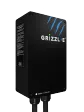 8.4Price tier: Budget, under $350Check price
The single most common amperage question in home EV charging: 40 amp vs 48 amp — which charger should I buy?
Here’s the up-front answer: 48 amps is objectively faster (11.5 kW vs 9.6 kW), but it only matters if your EV can accept it and your panel can support a 60-amp circuit. For most overnight-charging routines, 40 amps is already plenty — the 48-amp upgrade saves well under an hour on a typical night. Buy 48 amps when the install is cheap and your car can use it; save your money when either condition fails.
The numbers
| 40 A charger | 48 A charger | |
|---|---|---|
| Power at 240 V | 9.6 kW | 11.5 kW |
| Miles of range per hour | ~25–30 | ~32–37 |
| 8-hour overnight miles | ~200–240 | ~260–300 |
| Breaker required (125% rule) | 50 A | 60 A |
| Install type | Plug-in (NEMA 14-50) or hardwired | Hardwired only |
| Panel requirement | Works on most 100 A+ panels | 200 A preferred; 100 A often can’t fit it |
The real-world gap is smaller than the spec sheet suggests. On a typical overnight charge of 200 miles, 48 amps saves roughly 30–45 minutes versus 40. Both finish long before morning.
The deciding factor most buyers miss: your car’s onboard charger
Your EV — not your wall charger — sets the ceiling. The car’s onboard AC charger converts wall power to battery power, and every model has a maximum rate:
- 11.5 kW (48 A): Tesla Model 3/Y, most newer long-range EVs — these use the full 48 amps.
- ~9.6–11 kW: many mainstream EVs sit somewhere in this band; a 48-amp charger helps partially.
- 7.2 kW or lower: older EVs (Nissan Leaf), many plug-in hybrids — these cap out well below 40 amps, and a 48-amp charger buys them literally nothing.
Check your owner’s manual for “max AC charging rate” before paying for amperage you can’t use. The charge-time calculator can show what different amperages do for your specific car.
Breaker and wire sizing (the 125% rule)
EV charging is a continuous load — it draws max current for 3+ hours nightly. The National Electrical Code requires circuits for continuous loads to be rated at 125% of the load. So:
| Charger output | Minimum circuit | Breaker | Typical wire (conduit, THHN copper) | Typical wire (Romex/NM-B) |
|---|---|---|---|---|
| 32 A | 40 A | 40 A double-pole | 8 AWG | 8 AWG |
| 40 A | 50 A | 50 A double-pole | 8 AWG | 6 AWG |
| 48 A | 60 A | 60 A double-pole | 6 AWG | 4 AWG |
Two practical consequences:
- 48 amps can’t plug in. The NEMA 14-50 outlet tops out at a 50-amp circuit, which only supports 40 amps continuous. Every 48-amp charger is hardwired — no exceptions.
- 48 amps costs more to install. Thicker wire, a bigger breaker, and hardwiring labor typically add a few hundred dollars over a 40-amp plug-in install. Long wire runs widen the gap further.
Run your numbers first: panel capacity checker. For the full sizing reference including wire types and GFCI rules, see what size breaker for an EV charger.
When 40 amps is the right call
- Your panel is 100 A, or a 60-amp breaker would trigger a panel upgrade. (This alone decides it for most older homes — and Emporia Pro’s load management is worth a look before you pay for a panel.)
- You drive under ~150 miles a day. 40 amps recovers that in about 5 hours.
- Your EV’s onboard charger caps below 11.5 kW anyway.
- You want plug-in flexibility (renting, may move, want to take the charger with you). See hardwired vs plug-in.
The value king here is the Grizzl-E Classic (~$300–$450): 40 amps, tank-like metal build, NEMA 14-50 plug, DIP-switch amperage adjustment — deliberately simple and nearly indestructible.
When 48 amps is worth it
- Your panel has (or can cheaply add) a 60-amp circuit. Check installation costs and rebates — a 30% federal tax credit (capped at $1,000) applies to both.
- Your EV accepts 11.5 kW (most Teslas and newer long-range EVs).
- You drive a lot (200+ miles/day) or have short off-peak windows — the extra ~7 mph of charging squeezes a full charge into a 4–6 hour cheap-rate window.
- You want to future-proof: your next EV will almost certainly accept 48 amps.
The value pick is the EVIQO Gen 2 (~$379–$429 street): full 48 amps, Wi-Fi app, IP66 weather sealing, and strong owner ratings. If you want the flexibility to dodge the decision entirely, the ChargePoint Home Flex adjusts from 16–50 amps — start at 40 on your current circuit, crank it up after a panel upgrade.
Your driving pattern matters more than the spec sheet
Before comparing chargers, do the one calculation that actually decides this: your daily miles × your charging window.
| Daily driving | Miles to recover | Hours needed at 40 A | Hours needed at 48 A |
|---|---|---|---|
| 40 mi (average commute) | 40 | ~1.5 | ~1.2 |
| 100 mi (long commute) | 100 | ~3.5 | ~3 |
| 200 mi (heavy day) | 200 | ~7 | ~6 |
| Full 300-mi battery, 20→100% | 240 | ~8.5 | ~7 |
The average American drives under 40 miles a day. At that level, both chargers finish in under two hours — the difference is invisible. The 48-amp advantage only shows up on heavy-driving days or when your cheap off-peak electricity window is short (some utilities offer just 4–6 hours of super-off-peak rates, where 48 amps can squeeze in ~200 miles versus ~150 at 40).
The escape hatch: adjustable-amperage chargers
Here’s the move that makes this decision nearly risk-free: buy an adjustable charger and let the install decide the amperage. Most modern chargers can be configured down to match whatever circuit your panel supports:
- App-adjustable: ChargePoint Home Flex (16–50 A), EVIQO Gen 2 (6–48 A in 1-amp steps), Emporia Pro (12–48 A), Tesla units (12–48 A), Autel MaxiCharger (6–50 A).
- DIP-switch adjustable: Grizzl-E Classic (16–40 A, no app needed — the electrician sets it during install).
This means you can buy the 48-amp-capable charger today, run it at 40 amps on your existing 50-amp circuit, and unlock the full 48 later if you upgrade the panel or move. The ChargePoint Home Flex is the most flexible of all — its 16–50 A range covers every scenario in this article.
Best chargers in each class
If you go 48 amps (hardwired, 60-amp circuit):
- Best value: EVIQO Gen 2 (~$379–$429 street) — full 48 A, IP66 sealing, 25 ft cable.
- Most flexible: ChargePoint Home Flex (~$500–$600) — 50 A max, plug or hardwired, adjustable 16–50 A.
- Best for Tesla households: Tesla Universal Wall Connector (~$550–$600) — 48 A with the Magic Dock dual connector.
If you go 40 amps (plug-in or hardwired, 50-amp circuit):
- Best value: Grizzl-E Classic (~$300–$450) — tank-like, plug-in, DIP-switch adjustable.
- Best smart pick: EVIQO Gen 2 plug version or Emporia Pro plug version — 40 A with full app features.
Verdict
Don’t buy amperage as a status symbol — buy it as infrastructure math. Check your car’s onboard limit, check your panel, then pick the biggest amperage your house supports cheaply. If that’s 40 amps, you lose almost nothing in practice. If your panel fits 60 amps and your car takes 48, the upgrade is cheap future-proofing. And when in doubt, buy adjustable — the charger adapts to the house, not the other way around.